Computers and programming languages
introduction
by Eugeniy E. Mikhailov and
Greg Bentsen
Common features of modern computer
- Central Processing Unit (CPU)
- memory
- holds data and executable code
- data input and output
- same hardware can do different calculation sequences
- usually use binary system
- programmable for any general task
Speed measured in FLOPS (the number of floating point operations per
second) which usually proportional to the clock frequency.
Different computer architectures (AMD, Mac, Intel, ARM …) have
different proportionality coefficient.
My 2 GHz AMD Phenon PC (circa 2011) can do about 50 MegaFLOPS
Computers …
Computers are incredibly fast, accurate, and stupid. Humans beings are incredibly slow,
inaccurate, and brilliant. Together they are powerful beyond
imagination.
Leo Cherne (1969)
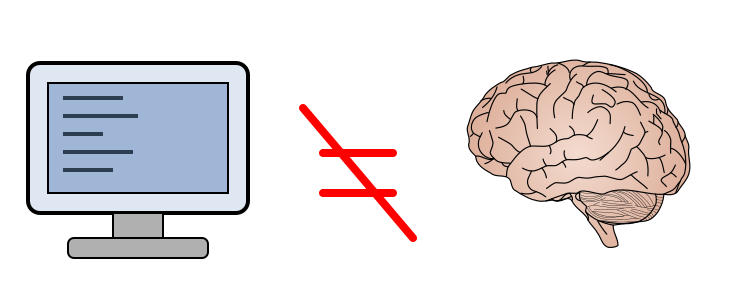
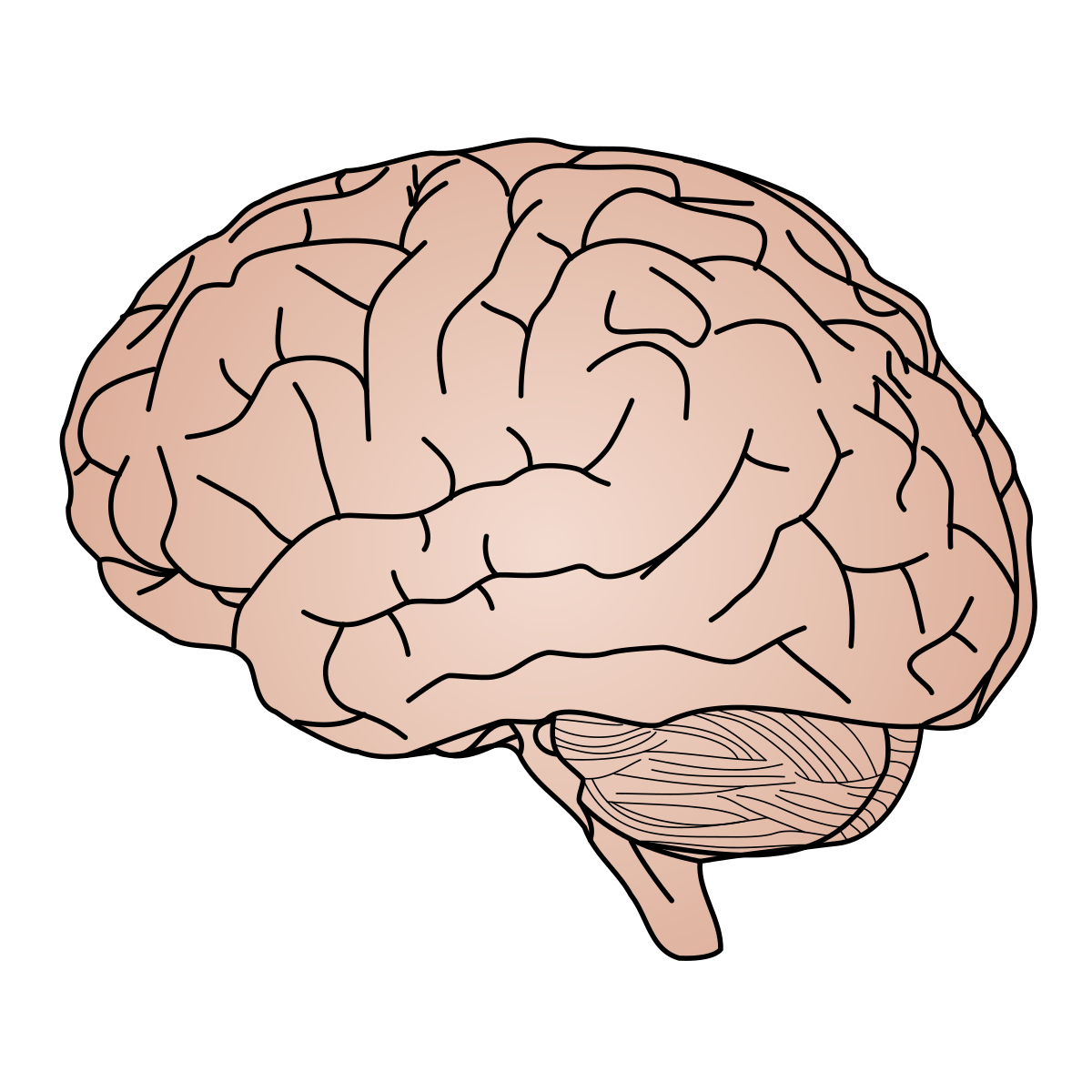
Computer is not a substitute for a brain. Source
AI.
Discretization - the main weakness of computers
- coming from resource limitation
For example:
But computer has limited amount of memory. Thus it cannot hold
infinite amount of digits and has to truncate somewhere.
Let’s say it can hold only 4 significant digits.
This called round off error due to
truncation/rounding. Then for computer
or
or even more interesting
Binary representation (cont.)
Byte is clearly too small to be used for real life computation.
Note that in stock Python integers are unbound
- for example
10**500 produces number with 500 zeros
1 + 10**500 or 2 * 10 **500 works- but
10*500 / 2 fails
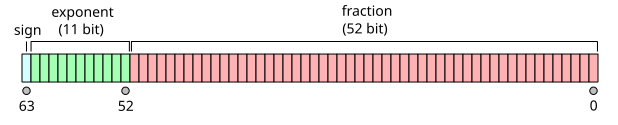
but in practical (fast) math Python uses up to 8 bytes or 64 bits for
number representation (this is CPU dependent)
- available range
- i.e. bounded by
- you can find this range by executing
sys.maxsize
- notice that if you attempt to use large numbers they will be
converted to float representation
- calculation time will increase